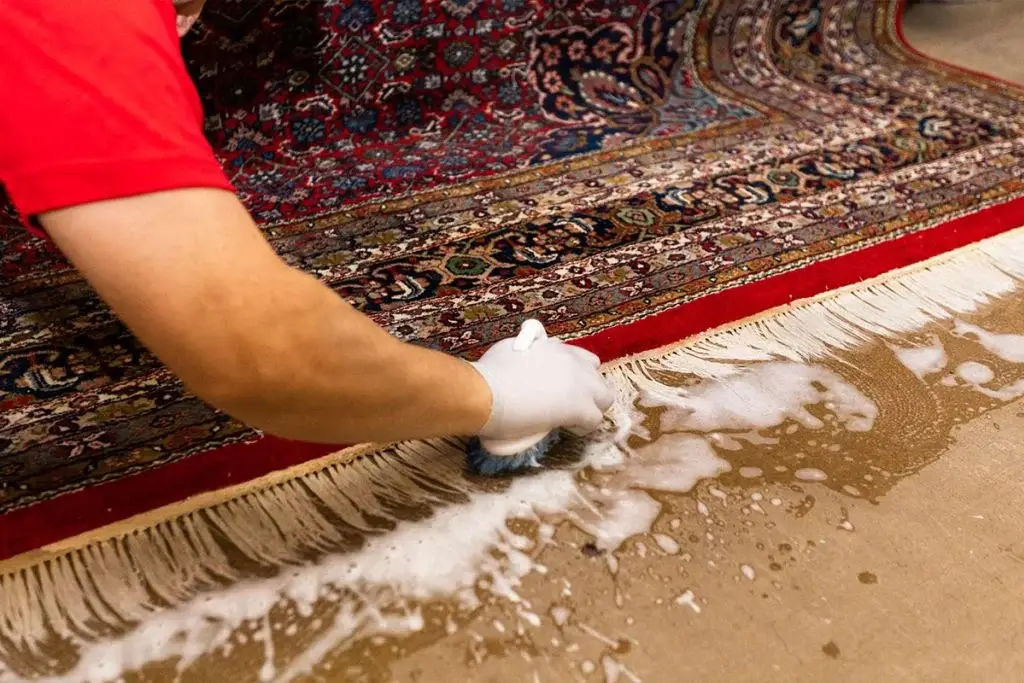
Wool rugs are durable, comfortable, and naturally resistant to odours and some staining, but they still need careful cleaning. Wool is a protein fibre with a structure that can be affected by moisture, heat, chemicals and excessive agitation. IICRC guidance specifically recommends minimizing agitation and using products formulated for wool.
The safest approach is simple: vacuum gently, blot spills quickly, test any cleaning solution first, use minimal moisture, avoid harsh chemicals and heat, and dry the rug thoroughly. If the rug is antique, hand-knotted, valuable, heavily stained or showing colour bleeding, professional wool rug cleaning is usually the safer option.
Why Wool Rugs Need Special Care
Wool contains keratin and has a naturally complex fibre structure. It can absorb moisture while still feeling relatively dry, and excessive agitation can contribute to felting. High-alkaline products can also affect the wool cuticle and may contribute to dye bleeding.
That is why a wool area rug should not automatically be treated like a synthetic carpet. Aggressive scrubbing, strong carpet chemicals, bleach, excessive water or high heat can create problems that are more difficult to fix than the original stain.
Wool also has natural stain- and odour-resistant properties, so frequent aggressive washing is not necessary. Regular maintenance can often prevent dirt from becoming deeply embedded.
Can You Clean a Wool Rug at Home?
Yes, but the type of cleaning matters.
Routine maintenance: Safe for most homeowners.
Small fresh spill: Usually manageable with careful spot cleaning.
Deep cleaning: Requires more caution because moisture, chemistry and drying become much more important.
Antique, Persian, Oriental or hand-knotted rug: Professional assessment is recommended before attempting deep cleaning.
If you are unsure about the rug’s construction, dyes or previous treatments, it is better to stop before experimenting.
How to Clean a Wool Rug Safely
1. Check the Care Instructions
Start by checking the manufacturer’s label or any documentation that came with the rug. Different wool rugs can have different construction, backing and cleaning requirements.
Do not assume that because one wool rug can tolerate a particular method, another can too.
2. Remove Loose Dirt Gently
Vacuum regularly to remove dry soil before it works deeper into the wool pile. Use a setting appropriate for the rug and avoid aggressive brushing that can pull or distort delicate fibres.
Rotating the rug periodically can also help distribute everyday wear and fading more evenly. IICRC area-rug guidance recommends regular rotation as part of routine care.
3. Test for Colourfastness
Before applying any liquid cleaner, test it in a hidden area.
Dab a small amount of the intended solution onto a clean white cloth and gently touch an inconspicuous section. Look for colour transfer, dye bleeding or a visible change in appearance.
If the colour transfers easily, stop. A professional rug cleaner should assess the rug before further cleaning.
4. Blot Spills Instead of Scrubbing
For coffee, wine, food or other fresh spills, act quickly.
First remove solid material carefully with a spoon or blunt edge. Then use a clean, absorbent white cloth to blot the liquid. Work from the outside of the affected area toward the centre to reduce spreading.
Never aggressively rub a wool rug. Friction can disturb the pile and contribute to felting or matting.
Woolmark’s stain guidance similarly recommends gentle dabbing, blotting and pre-testing treatments for colour or dye changes.
5. Use a Wool-Safe Cleaner Sparingly
If the care instructions allow spot cleaning, choose a mild product specifically suitable for wool rather than a heavy-duty carpet detergent.
Neutral, mild wool detergents are generally preferred for wool products, while bleach and strong detergents should be avoided.
Do not assume that a popular DIY mixture is automatically safe for every rug. Vinegar, baking soda and other household treatments have specific uses for some wool items, but a rug may have different dyes, backing and construction.
For an expensive or colour-sensitive rug, professional stain removal is a safer choice than experimenting.
6. Use Minimal Moisture
One of the biggest mistakes in wool rug cleaning is using too much water.
A wet rug can take longer to dry, and prolonged dampness can create unpleasant odours and potentially affect the backing or surrounding materials. Avoid soaking the rug unless its construction and professional cleaning method specifically call for immersion washing.
7. Dry the Rug Thoroughly
Drying is just as important as cleaning.
After spot treatment, remove as much moisture as possible with clean absorbent towels. Allow the rug to dry with good airflow and keep it away from excessive direct heat.
Do not use a heater, hair dryer or other intense heat source to force the rug dry. Wool can be affected by prolonged high temperatures, and controlled drying is an important part of professional rug care.
What Should You Never Use on a Wool Rug?
| Avoid | Why it can be a problem |
| Chlorine bleach | Can damage wool fibres |
| Strong alkaline cleaners | May damage the wool cuticle and affect dyes |
| Aggressive scrubbing | Can cause felting or matting |
| Excessive water | Makes drying more difficult |
| High heat | Can damage natural fibres |
| Unverified stain remedies | May cause colour or fibre damage |
| Heavy-duty carpet detergents | May not be formulated for wool |
If you have already tried a product and the rug begins shrinking, matting, bleeding colour or developing an unusual odour, stop cleaning and have it assessed.
How to Remove Common Wool Rug Stains
For coffee or wine, blot as much liquid as possible immediately rather than allowing it to spread into the pile. Woolmark provides stain-specific methods for wool, but these recommendations are primarily written for wool products and should not automatically be transferred to every rug.
For mud, allow loose material to dry when appropriate, then carefully remove the dry soil before considering a small amount of moisture.
For pet urine or persistent pet odour, DIY surface treatment may not address contamination that has penetrated deeper into the rug. This is a good situation for professional rug cleaning.
For old or unknown stains, avoid repeatedly adding different chemicals. Multiple treatments can make professional stain removal more complicated and may increase the risk of colour damage.
Can You Steam Clean a Wool Rug?
Steam cleaning should not be treated as a universal solution for wool rugs.
The issue is not simply whether steam is hot. The rug’s fibre, dyes, construction, backing, moisture tolerance and previous condition all matter. Professional cleaning standards emphasize evaluating fibre and construction, choosing appropriate chemistry and cleaning methods, and performing pre- and post-cleaning inspections.
If you are considering steam cleaning a Persian rug, Oriental rug, antique wool rug or valuable hand-knotted rug, professional assessment is preferable to guessing.
When Should You Choose Professional Wool Rug Cleaning?
Professional cleaning makes particular sense when:
- The rug is antique or valuable.
- It is hand-knotted or handmade.
- Colours appear unstable.
- There is significant dye bleeding.
- The rug has deep or widespread staining.
- Pet urine has penetrated the rug.
- The rug has a persistent odour.
- The backing is delicate or damaged.
- You need a full deep clean rather than spot treatment.
- You are unsure which cleaning method is safe.
A professional process can include inspection, fibre and dye assessment, appropriate cleaning chemistry, controlled washing or immersion where suitable, moisture extraction and controlled drying.
The ANSI/IICRC S100 standard specifically addresses professional rug and textile-floor-covering cleaning, including fibre and construction assessment, chemistry, equipment, cleaning methods, inspection and stain removal.
Professional Wool Rug Cleaning in Mississauga, Scarborough, Cambridge, Vaughan and Oakville
For homeowners in Mississauga, Scarborough, Cambridge, Vaughan and Oakville, the decision is not simply whether a rug is dirty. It is whether the cleaning method matches the rug.
A professional rug cleaning service can be especially useful when a wool rug needs more than routine vacuuming or careful spot cleaning. The Rugs Spa provides rug cleaning services for homeowners across these Ontario communities, making professional assessment an option when DIY cleaning becomes too risky.
If you are comparing your options, read our guide DIY vs professional rug cleaning before deciding how to handle a valuable or heavily soiled rug.
How Often Should a Wool Rug Be Professionally Cleaned?
There is no single schedule that suits every wool rug.
Cleaning frequency depends on foot traffic, pets, children, outdoor soil, indoor environment, rug construction and the rug’s overall condition. Regular vacuuming and prompt spill treatment can reduce the need for frequent deep cleaning.
Instead of waiting for a rug to become heavily soiled, pay attention to changes in appearance, odour and texture. If normal maintenance no longer restores its appearance, professional cleaning may be appropriate.
Final Thoughts
Learning how to clean a wool rug without damaging the fibres is mostly about knowing what not to do. Avoid excessive water, heat, harsh chemicals and aggressive scrubbing. Use gentle maintenance, blot spills quickly, test treatments first and dry the rug properly.
For routine care, homeowners can often handle basic maintenance themselves. For antique, Persian, Oriental, hand-knotted, valuable or heavily stained rugs, professional wool rug cleaning provides a safer path because the cleaning method can be selected according to the rug’s fibre, dyes and construction.
FAQs
What is the safest way to clean a wool rug?
The safest basic approach is gentle vacuuming, prompt blotting of spills, a wool-safe cleaning product used sparingly, minimal moisture and thorough drying. Always follow the rug manufacturer’s care instructions.
Can I clean a wool rug at home?
Yes, routine maintenance and small fresh spills can often be handled at home. Deep cleaning is more complicated, particularly for antique, hand-knotted, valuable or colour-sensitive rugs.
Can you use water to clean a wool rug?
Small amounts of water may be appropriate for certain spot-cleaning methods, but avoid saturating the rug. Excess moisture can make drying difficult and may affect the rug or backing.
Can you use vinegar on a wool rug?
There is no universal answer. Woolmark provides vinegar-based treatments for certain wool stains, but rugs can differ in dyes, construction and backing. Always check care instructions and test first.
What is the best cleaner for a wool rug?
Choose a mild, neutral cleaner specifically formulated or approved for wool. Avoid bleach and heavy-duty detergents.
Can you steam clean a wool rug?
Not every wool rug should be steam cleaned. The appropriate method depends on the rug’s fibre, dyes, construction and condition, so valuable or delicate rugs should be assessed professionally.
Why do wool rugs shrink?
Shrinkage can result from unsuitable moisture, heat, agitation or cleaning conditions. Wool can also swell when wet and is susceptible to felting when exposed to excessive agitation.
Why is my wool rug shedding?
Some shedding can occur naturally with wool, particularly when a rug is new. Excessive shedding, however, may require evaluation, especially if the pile or construction appears to be deteriorating.
How do you remove pet urine from a wool rug?
Blot fresh urine immediately without aggressive rubbing. If the urine has penetrated deeply or an odour remains, professional cleaning is preferable because surface treatment may not reach the affected areas.
How often should a wool rug be professionally cleaned?
It depends on traffic, pets, children, rug construction and condition. Rather than following one fixed interval, have the rug professionally assessed when routine vacuuming and spot cleaning are no longer enough.
When should I call a professional rug cleaner?
Call a professional when the rug is valuable, antique, hand-knotted, heavily stained, colour-sensitive, structurally damaged or affected by persistent pet urine or odour. Professional rug cleaning involves assessing the fibre and construction before selecting a cleaning method.