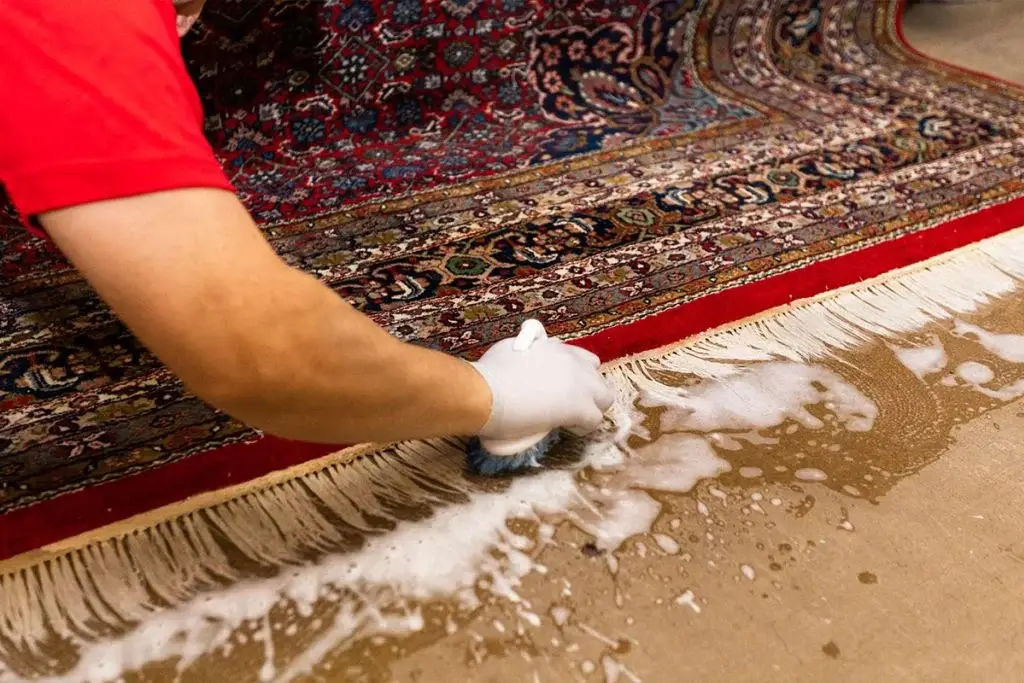
A flooded basement is stressful enough without watching your favourite rug sit in a puddle. Whether the water came from a burst pipe, a leaking water heater or a storm, area rugs are usually among the first things to get soaked. The good news is that many of them can be saved if you act quickly and avoid a few common mistakes.
Here is what to do with your rugs in the first 48 hours after a basement flood, and how professional rug washing brings them back.
Why you need to act fast
A wet rug does not dry quickly on a cool basement floor. While it stays damp, mildew can start growing in the backing, dyes can bleed into each other, natural fibres can brown or shrink, and a musty smell can set in. The first 24 to 48 hours make the biggest difference between a rug that comes back looking great and one that is ruined.
Step 1: Check what kind of water it was
- Clean water from a burst supply pipe, water heater or tap. Rugs soaked in clean water have the best chance of a full recovery.
- Grey water from a washing machine, dishwasher or sump pump. The rug needs a full professional wash, not just drying.
- Sewer or outside flood water from a floor drain, sewer backup or overland flooding. This water carries bacteria. Wear gloves, and talk to your insurance adjuster before deciding whether to clean or replace the rug.
Step 2: Get the rug out of the water
- Make sure the area is safe and there is no risk from electricity.
- Take photos of the rug where it lies for your insurance claim.
- Lift the rug off the wet floor. Roll it loosely if you need to move it. Do not fold it.
- Remove the rug pad underneath. Wet pads usually need to be replaced.
- Lay the rug flat or drape it over clean supports in a dry, airy room, off the concrete, so air reaches both sides.
Step 3: Avoid these common mistakes
- Leaving it folded or piled up. Folded wet rugs trap moisture and colours transfer between layers.
- Drying it on a heater or in strong sun for hours. Uneven heat can shrink and distort wool and cotton.
- Scrubbing with household cleaners or bleach. This can set stains and strip dyes.
- Putting it back on a damp floor. Wait until the room itself is completely dry.
- Throwing away a valuable rug too soon. Let your adjuster see it first.
Step 4: Get it professionally washed
Drying a rug with fans removes water, but not the silt, dirt and bacteria that flood water leaves deep in the pile. Those are what cause lingering odour and mildew. A proper wash removes them.
At The Rugs Spa, rugs are washed by machine at our facility, rinsed thoroughly and dried under controlled conditions. Wool, handmade and silk rugs get our Natural Fiber Care treatment, and pet odour treatment is available when it is needed. We offer doorstep pickup and delivery across the GTA, and every location accepts walk-in rugs during business hours with no appointment. When you book, tell us what the rug is made of and what kind of water it was in, so we can choose the right treatment. See rug washing by machine for details.
Which rugs usually come back best?
- Wool and handmade rugs soaked in clean water and washed quickly often recover very well.
- Synthetic rugs handle water well and are usually easy to clean, though latex backings can weaken.
- Cotton and jute rugs are more likely to brown or shrink.
- Silk rugs are delicate and should be washed as soon as possible.
- Rug pads are usually replaced after a flood.
Your rug is only part of the problem
If your rug got soaked, so did the floor under it, and often the baseboards and the bottom of the walls. Water trapped in drywall and subfloors can lead to mould within a couple of days, even after the rug is gone. Taking the rug out is the easy part. The basement itself needs water extraction, proper drying and moisture checks.
For the flooded basement itself, 999 Restoration handles emergency water extraction, drying and mould prevention 24/7 across Southern Ontario. Their guide to saving rugs after water damage covers the restoration side in more detail.
Frequently asked questions
How long can a rug stay wet before it is ruined?
There is no exact limit, but the risk of mildew, colour bleeding and odour rises quickly after 24 to 48 hours. The sooner it is washed and dried, the better.
Can I just dry my rug outside?
Drying in the shade helps remove water, but it does not remove the contaminants flood water leaves behind. A rug from a flood should be washed, not only dried.
Will my insurance pay for rug cleaning after a flood?
Area rugs are usually part of the contents portion of a home insurance claim. Keep your photos and the cleaning invoice, and check with your adjuster.
Do you pick up rugs from the basement?
Pickup and delivery is at your door. Please bring the rug to the doorstep and make sure it is clear of furniture.
Book your flood rug cleaning
Call The Rugs Spa at +1-844-784-7772 to book pickup, or bring your rug to any of our locations during business hours. The sooner we get it, the better it will look.